TLDR:
• Russia formally recognises Taliban rule
• Ambassador credentials accepted in Moscow
• Court lifts ban on Taliban operations
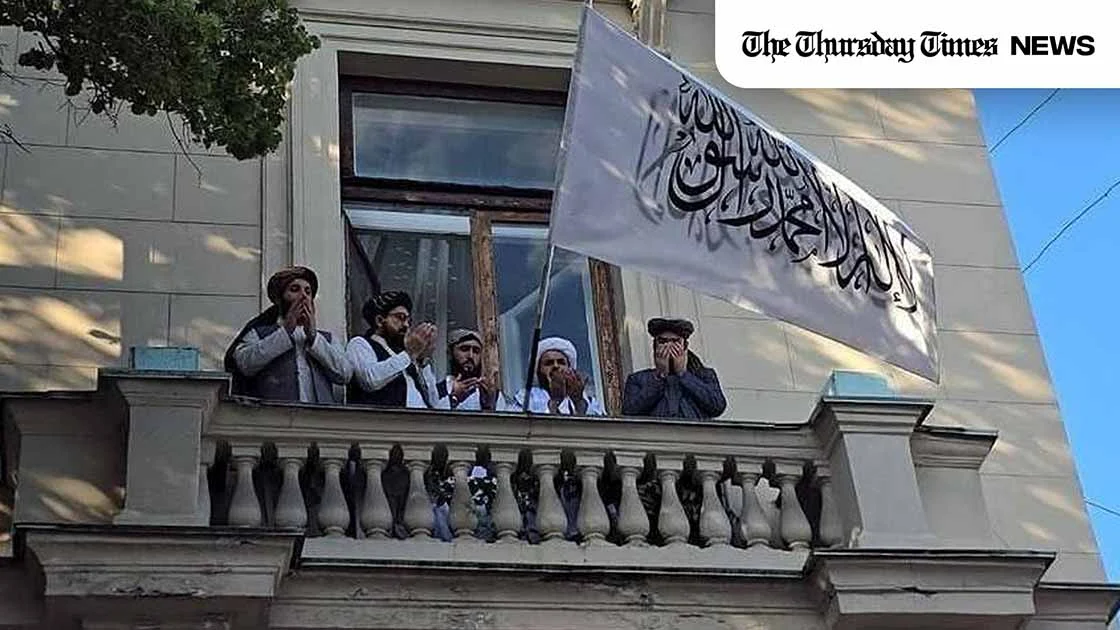
MOSCOW (The Thursday Times) — Russia has formally recognised the Taliban-led Islamic Emirate of Afghanistan, marking a significant shift in Moscow’s regional posture and realpolitik priorities. The announcement, confirmed by the Russian Foreign Ministry, signals the Kremlin’s intent to re-establish strategic partnerships across Central and South Asia, despite international reluctance to engage with the Taliban regime.
The move follows a direct recommendation from Foreign Minister Sergey Lavrov and was personally approved by President Vladimir Putin. It reflects a calculated Russian effort to embed itself deeper into the region’s geopolitical fabric, particularly as Western alliances maintain distance from Kabul. Recognition grants the Taliban legitimacy from a major global power and paves the way for expanded diplomatic, economic, and security cooperation.
On the same day, Deputy Foreign Minister Andrey Rudenko formally accepted the credentials of Gul Hassan, Afghanistan’s newly appointed ambassador to Russia, who arrived in Moscow at the beginning of the month. The timing was precise — a symbolic reinforcement of Russia’s decision, stitched into a broader narrative of normalisation.
This development did not happen in isolation. Earlier in the year, Russia’s Supreme Court lifted the legal ban on Taliban activities in the country. The prosecutor general’s plea to remove the group from the terrorism list was accepted without much resistance, a move quietly but firmly coordinated through the state’s legal and diplomatic machinery. The Foreign Ministry later clarified that this shift would enable a “comprehensive partnership” to evolve between Moscow and Kabul — a phrase that underscores intentions beyond mere diplomacy.
This is not just a policy recalibration — it’s strategic repositioning. With China already deepening its engagement with the Taliban through economic corridors and regional influence, Russia’s move reflects a desire not to be left behind. For Moscow, Afghanistan is more than a troubled neighbour — it’s a lever for influence over regional stability, migration, narcotics routes, and Islamist militancy.
By granting formal recognition, Russia aims to secure a front-row seat in the evolving power dynamics of the Muslim world. In this equation, Pakistan becomes a pivotal player, as Moscow increasingly courts Islamabad to build an axis stretching from Central Asia to the Persian Gulf. The Kremlin sees value in integrating Afghanistan into a wider regional orbit — not as a pariah, but as a participant.