Every story, newest first

75 stories

Yesterday

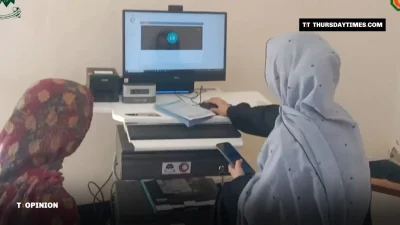
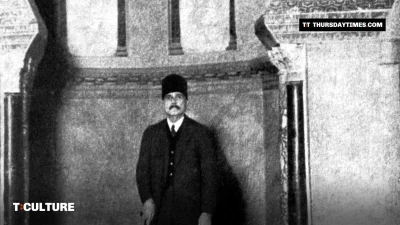
Great injustice to Urdu in India

“This great language, which has produced perhaps the best poetry in modern India … and which is a shining gem in the treasury of Indian culture, is today neglected, and by some people even looked at with suspicion,” writes former Supreme Court of India Justice Markandey Katju.

A young woman in a headscarf sits looking at her phone at a desk in a small library, walled floor to ceiling with shelves of Urdu books

Tuesday 10 November 2026

Sunday 8 November 2026

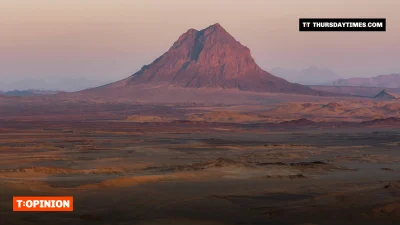
Pakistan’s mineral ambitions need more than mines

As global investors gather for PMIF26, Pakistan must look beyond mineral extraction and invest in the infrastructure, skills and industries that can turn its geological wealth into lasting prosperity

A lone pyramid-shaped mountain glows pink at dusk above a vast, rolling brown desert

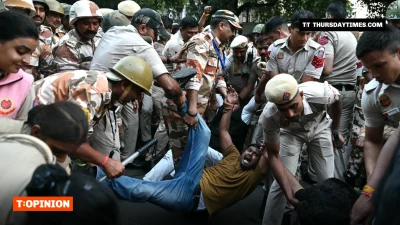
The fetish of democracy

“90% of Indians have feudal, not rational, mindsets, full of casteism and communalism, which I often call ‘gobar’, so they are unfit to vote,” writes former Supreme Court of India Justice Markandey Katju.
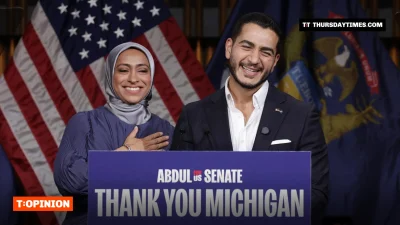
Police officers in helmets and uniforms drag a shouting protester in jeans across the road during a crowded demonstration

Friday 6 November 2026

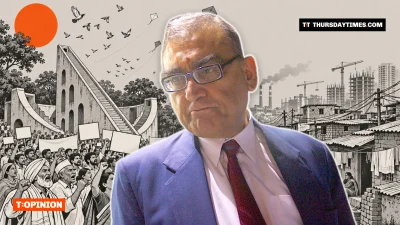
The way out for India

Elections cannot end India’s poverty and division, the former Supreme Court of India judge argues. Only a united people’s struggle can
Justice Markandey Katju in front of an illustration of protesters at Jantar Mantar, kites in the sky, and slums and factories

Saturday 31 October 2026

Monday 19 October 2026

Rethinking Musharraf

I grew up in a PML-N house where the general was the villain of every story. Fifteen years on, I've stopped believing it.

A leader can be all of that and still be the best this country has had in fifty years, because the bar, God help us, is where it is. — MICHAEL MCCALL FOR THE THURSDAY TIMES

Sunday 18 October 2026

Tuesday 6 October 2026

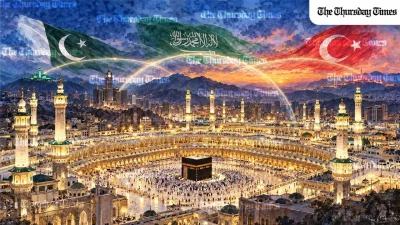
The politics of collective security

The strongest defence of the Haramain would be one that keeps the turbulence of the region far from their gates. That is more than deterrence; it is stewardship of a trust larger than any single state.

If the Makkah Defence Pact is to matter, it must become more than an arrangement for responding to danger. Its real value will lie in whether it can help prevent danger from reaching the sacred cities at all. — MICHAEL MCCALL FOR THE THURSDAY TIMES

Sunday 4 October 2026

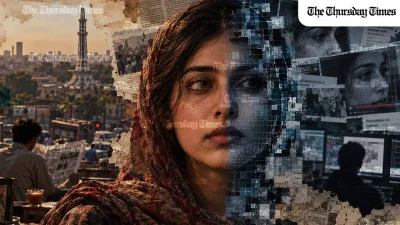
In the AI age, knowing what to believe may matter most

In the AI age, the challenge is no longer finding information, but deciding what deserves our trust. As artificial intelligence reshapes news and society, human judgement, verification, and context matter more than ever, writes Fizza Sajawal.

AI can help us learn, research, analyse, create and solve problems in ways that were unimaginable only a short time ago. The challenge is not whether we should use AI. The challenge is whether we will remain in control of how we use it. — MICHAEL MCCALL FOR THE THURSDAY TIMES

Sunday 5 July 2026

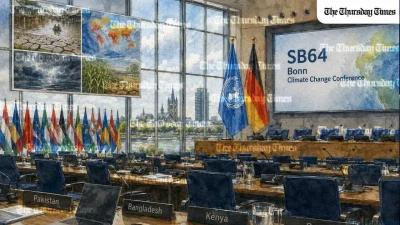
Bonn’s quiet climate reality check

The Bonn Climate Change Conference may not attract the drama of a COP summit, but SB64 offered a clear reality check: the future of climate diplomacy will be judged less by promises and more by whether countries can deliver practical, fundable and sustainable climate action.

Bonn’s quiet climate reality check

Wednesday 22 April 2026

Waiting for Godot in Islamabad

Islamabad and Rawalpindi have found themselves trapped in a strange political theatre: roads sealed, schools disrupted, businesses hit and ordinary routines broken, all in anticipation of talks between American and Iranian delegations that keep being delayed.

As Pakistan positions itself as a mediator between the US and Iran, Islamabad and Rawalpindi are paying the domestic price through road closures, disruption, inflation and lost livelihoods. — MICHAEL MCCALL FOR THE THURSDAY TIMES

Tuesday 21 April 2026

The strange intimacy between Pakistan and Zohran Mamdani

Zohran Mamdani is not Pakistani, yet he has stirred a rare warmth in Pakistan. His comfort with Urdu and Hindustani, his visible Muslim identity and his wider South Asian cultural ease have made him feel less like a distant foreign politician and more like someone many Pakistanis instinctively understand.

Zohran Mamdani may not be Pakistani, but his public presence has struck a deep chord in Pakistan. His use of Urdu and Hindustani, visible Muslim identity and wider South Asian sensibility have made him feel culturally intimate across borders. — MICHAEL MCCALL FOR THE THURSDAY TIMES VIA BLOOMBERG

Thursday 9 April 2026

Isolation to influence

Pakistan’s role in securing the US-Iran ceasefire has opened a narrow but important window for peace, projecting Islamabad as a credible mediator. Yet the ceasefire is only a pause, and Pakistan’s test now lies in turning this diplomatic breakthrough into lasting regional, domestic, and economic gains.

The recent ceasefire between the United States and Iran has provided a fragile window, essentially buying time for real peace-making through deeper negotiations. — FILE/ANADOLU

Friday 13 February 2026

Monday 5 January 2026

False is the new true

From slacktivism to viral political narratives, Pakistan’s low digital literacy and algorithmic feeds are turning falsehood into habit, weakening trust, polarising society, and making reality itself feel negotiable.

In digital spaces, lelochezia is effectively engineered into the system: outrage is built in, affirmation is reinforced by attention, and repetition is rewarded by affirmation. — MICHAEL MCCALL FOR THE THURSDAY TIMES

Friday 26 December 2025

An ode to Joyland

Joyland doesn’t lecture on patriarchy, but rather makes you live inside its soft violence. It insists on the intimacy of consequences: posture, mood, shame, and what they do to a life.

Joyland understands how people don’t explode, they erode, one compromise at a time. — FILE

Thursday 25 December 2025

Nawaz’s legacy

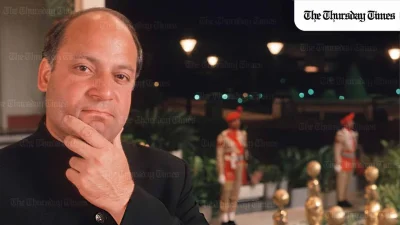
Ten years after Lahore’s birthday stopover, a portrait of Nawaz Sharif as the rare Pakistani leader who pursued peace with India and Afghanistan while insisting minorities belonged at the centre of the nation.

Ten years on from that unannounced Lahore landing, a tribute to Nawaz Sharif’s stubborn faith in peace with India and a Pakistan wide enough to hold all its citizens. — Peter Charlesworth/LightRocket | Adjusted for print by Michael McCall for The Thursday Times

Friday 19 December 2025

The cost of never moving on

Why Pakistan remains trapped in the emotional afterlife of a failed promise, and why moving forward may require letting one man fade from the centre of politics.

How fixation on a single leader has crowded out reform, stability and statecraft. — MICHAEL MCCALL FOR THE THURSDAY TIMES

Tuesday 11 November 2025

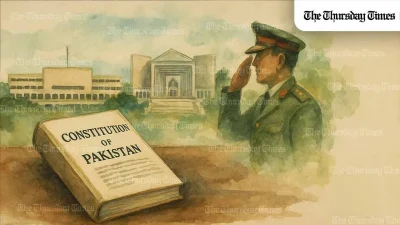
A republic strong enough to face its truth

By writing real power into the Constitution, the Twenty Seventh Amendment does not create domination, it drags it out of the shadows and subjects it to text, structure and scrutiny. What unsettles its critics is not authoritarianism, but honesty: this amendment ends the comfortable lie that Pakistan’s true centres of command live outside the law.

One may prefer slower gestation, but the Constitution does not enshrine a right to leisurely politics. It enshrines procedures. — MICHAEL MCCALL FOR THE THURSDAY TIMES

Sunday 29 June 2025

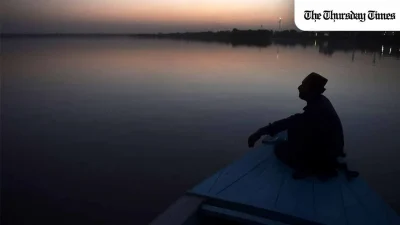
Before India, there was Sindhu

The name Indus comes from the ancient Sanskrit Sindhu, which evolved through Persian, Greek, and Latin adaptations reflecting the river's role in identity, conquest, and civilisation; this transformation tells a larger story of how geography shapes names and history through foreign tongues, empires, and time.

In the hymns of the Rigveda, dating back over three thousand years, Sindhu was more than just a river — it was a force of nature. — ASIF HASSAN/AFP

Saturday 21 June 2025

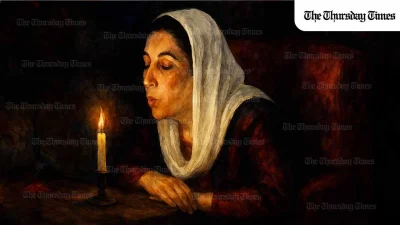
The candle in the wind

Benazir Bhutto was not flawless. That would have made her forgettable. She was urgent. She was unfinished. She was fury wrapped in grace. And she walked straight into history with her head high, her voice clear, and her fate already sealed. But she did not flinch.

Benazir does not belong in a glass case. She belongs in the messy, difficult conversations about what it means to lead with both elegance and exhaustion. — MICHAEL MCCALL FOR THE THURSDAY TIMES

Saturday 14 June 2025

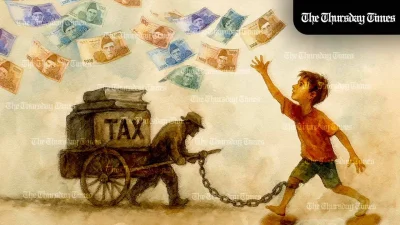
Revenue without reforms

The 2025–26 federal budget, while notable for its aggressive revenue ambitions, fails to articulate a cohesive development vision and ultimately resembles a consolidation mechanism rather than a transformative roadmap.

The budget's public expenditure priorities reflect an outdated bias towards rigid recurrent obligations at the expense of social investment and climate resilience. — MICHAEL MCCALL FOR THE THURSDAY TIMES

Tuesday 29 April 2025

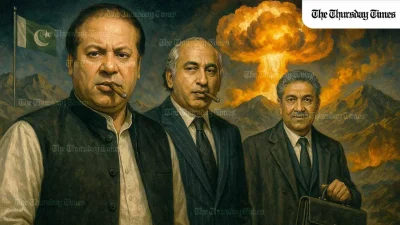
The road to deterrence

History is not made in conference rooms or cocktail parties. Sometimes, it is written in the dark, among men who refuse to beg for survival. Pakistan’s nuclear program was one of those moments — a nation wounded, cornered, and left with no choice but to fight its way into the club of the untouchables.

The story of Pakistan’s nuclear program is not written in treaties or official communiqués. It is etched in desperation, defiance, and survival. — MICHAEL MCCALL FOR THE THURSDAY TIMES

Monday 6 January 2025

Misogyny cloaked as criticism

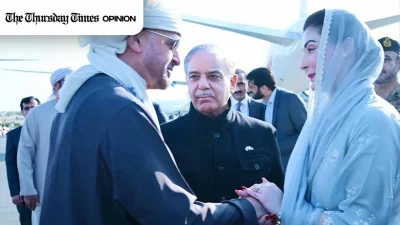
The backlash from PTI circles over Maryam Nawaz’s diplomatic handshake with the UAE President lays bare the deep-seated misogyny overshadowing her leadership. This fixation on protocol exposes a calculated attempt to undermine her transformative initiatives through gendered criticism.

A file photo is shown of Chief Minister for the Punjab, Maryam Nawaz (L), with UAE president Mohamed bin Zayed at Rahim Yar Khan on January 5, 2025. — FILE/THE THURSDAY TIMES

Saturday 30 November 2024

The SIFC is a visionary concept with flawed execution

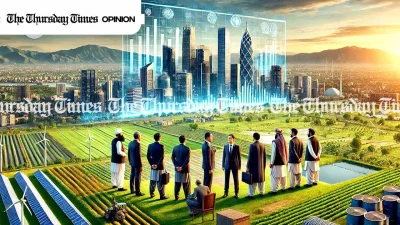
Pakistan's untapped FDI potential hinges on proactive diplomacy, strategic investment policies, and private sector engagement to transform its economy; empowering ambassadors can unlock opportunities for sustainable growth and development, writes global policy expert Abdul Rauf Shakoori.

An illustration is shown of an SIFC moot. — ORIGINAL/THE THURSDAY TIMES

Thursday 31 October 2024

Did the PTI’s protest against Qazi Faez Isa in London break English law?

In London, PTI supporters protesting against former Chief Justice Qazi Faez Isa may have breached English law on harassment and criminal damage. Legal implications hinge on whether actions, like allegedly striking Isa’s car, could be considered reckless or intimidating under UK statutes.

A file photo is shown of PTI London members obstructing the retired Chief Justice of Pakistan, Qazi Faez Isa's, escort vehicle. — X/@SHAYANA2307

Thursday 5 September 2024

Why Imran Khan must become the chancellor of Oxford University

Imran Khan’s bid to become Oxford University's Chancellor while imprisoned symbolises resilience and leadership, offering the institution a global icon committed to justice and education, though critics argue his legal troubles complicate his chances, writes political theorist Gavin Mercer

An illustration is shown of former Pakistani prime minister Imran Khan. — ORIGINAL/THE THURSDAY TIMES

Wednesday 27 December 2023

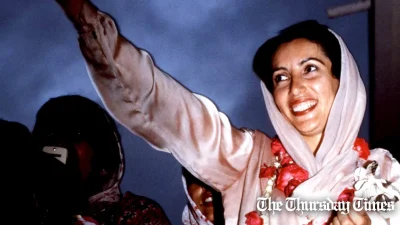
Benazir, the pioneer

Benazir Bhutto, twice Prime Minister of Pakistan, was the first woman to lead a democratic government in a Muslim-majority country. Her landmark tenures, from 1988-1990 and 1993-1996, were marked by significant political and social reforms.

Former prime minister Benazir Bhutto is released from jail by General Zia-ul-Haq to fanfare from the Pakistan People's Party on September 9, 1986. — GAMMA-RAPHO/THE THURSDAY TIMES

Thursday 30 November 2023

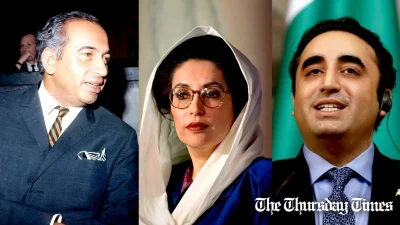
The enduring impact of the PPP

Over its 55-year history, the Pakistan People's Party has been a transformative force in Pakistan, championing inclusivity and social welfare under the leaderships of Zulfikar Ali Bhutto, Benazir Bhutto, and Asif Ali Zardari, and continuing its legacy with Bilawal Bhutto Zardari.

A combined file photo is shown of former Pakistani president Zulfikar Ali Bhutto in 1965 (L), former Pakistani prime minister Benazir Bhutto in 1995 (C) and former Pakistani foreign minister Bilawal Bhutto-Zardari (R). — FILE/THE THURSDAY TIMES

Thursday 12 October 2023

Saturday 16 September 2023

Good to see you off, Mr Bandial

A theatrical exit for Mr Bandial leaves little to the imagination in terms of the egregious legacy the former Chief Justice has left behind.

An illustration is shown of outgoing Supreme Court Chief Justice Umar Ata Bandial. — FILE/THE THURSDAY TIMES

Thursday 4 May 2023

Friday 17 February 2023

Thursday 9 February 2023

Thursday 5 January 2023

Tuesday 8 November 2022

Monday 24 October 2022

Arguments must stay alive

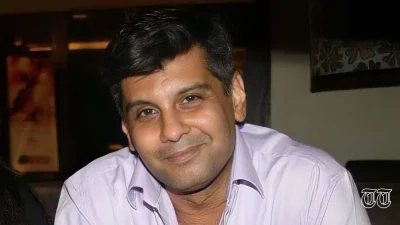
I arranged Arshad's first interview with Imran Khan. With his demise, another argument dies today. We may agree or disagree with an argument but arguments must stay alive. This is freedom of expression.

A file photo is shown of slain Pakistani journalist Arshad Sharif.
Published by Thursday Media International thursday.media