TLDR:
- Inflation hits six-year low
- Central bank may cut rates
- Improved food supplies ease prices
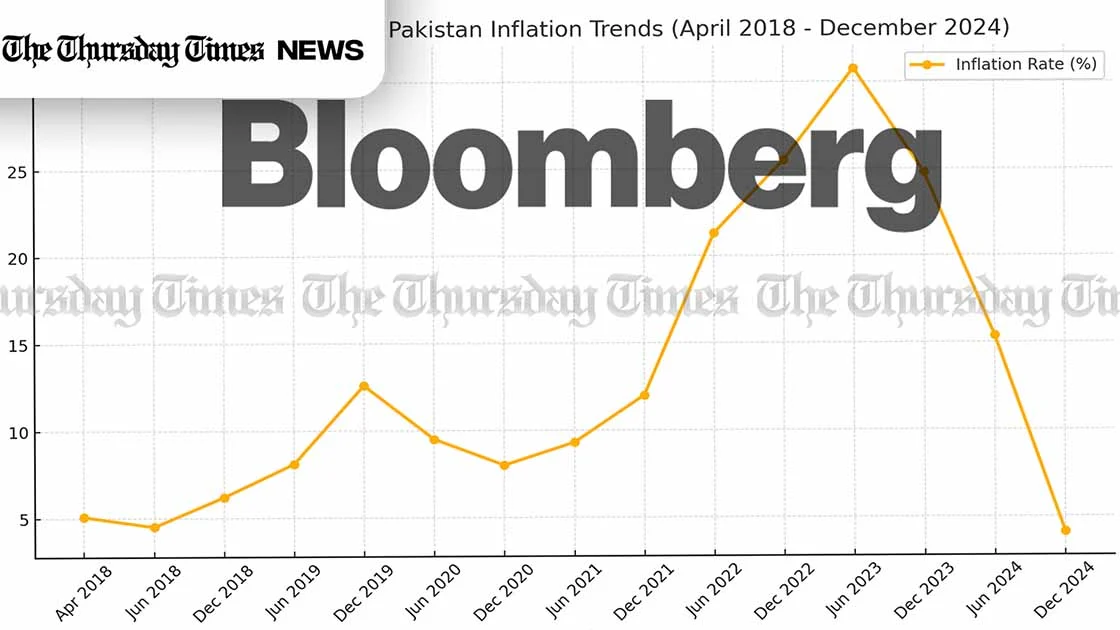
ISLAMABAD (The Thursday Times) — Pakistan’s annual inflation rate eased to 4.1% in December 2024, marking the lowest reading since April 2018, according to a Bloomberg report. This deceleration provides policymakers with room to further cut interest rates and focus on stimulating the nation’s sluggish economic growth.
Inflation hits a six-year low
As reported by Bloomberg, the Consumer Price Index for December rose at a modest pace of just over four percent from the previous year. This figure is notably lower than November’s increase and falls short of economists’ projections. The slower rate of inflation is largely attributed to improved food supplies and contained demand, key factors that have played a role in easing price pressures across the economy.
This drop offers significant relief in an economy grappling with both domestic and global challenges. Analysts suggest that this development signals a crucial opportunity for the State Bank of Pakistan to act more aggressively in its monetary policy to drive growth.
Monetary policy adjustments
The central bank has already reduced its benchmark rate by hundreds of basis points since mid-year, a significant easing to support economic activity. Bloomberg highlights expectations among some economists that the central bank may bring the key rate down to more manageable levels in the first quarter of 2025.
Easing inflation not only supports such projections but also highlights the potential for improved investor and consumer confidence. However, monetary easing will need to be carefully calibrated to avoid external vulnerabilities, such as pressure on the currency or widening trade deficits.
Food and energy prices stabilise
The central bank’s previous remarks on inflation anticipated further moderation, driven by improved food supply chains and demand-side containment. December’s data confirms this trend, with food prices showing a slight annual increase after experiencing contraction in November.
Meanwhile, housing and energy costs, which have been significant contributors to inflation, also saw a deceleration last month. This stability suggests that supply-side improvements are beginning to take effect, creating a more balanced economic outlook.