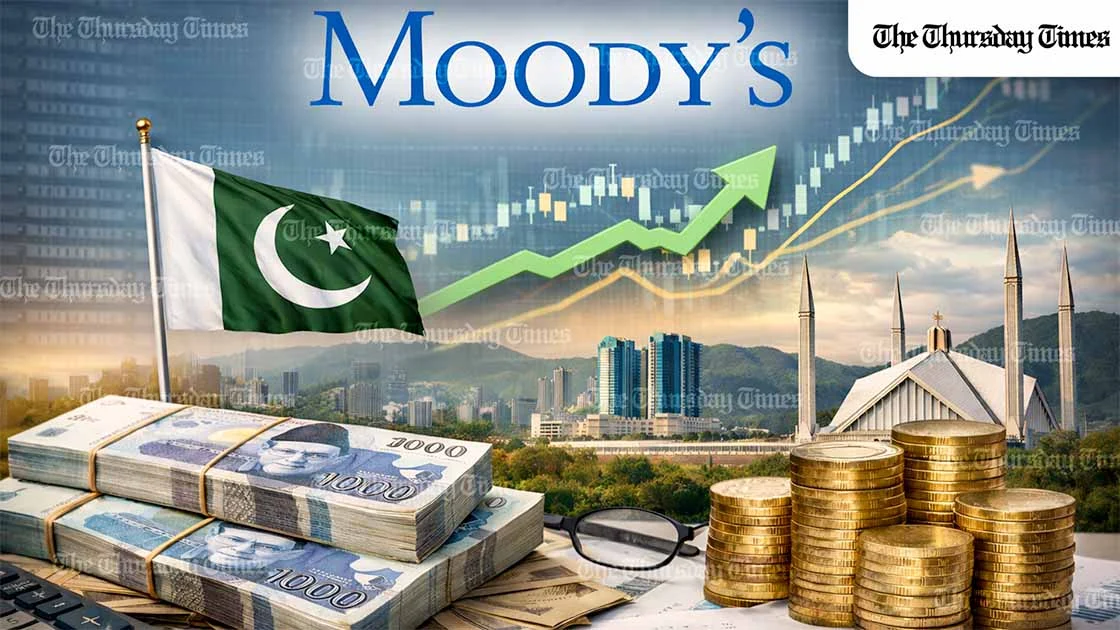
نیویارک (تھرسڈے ٹائمز) — موڈیز ریٹنگز (Moody’s Ratings) نے پاکستان کے بینکاری نظام کے لیے اپنا آؤٹ لک مثبت سے تبدیل کر کے مستحکم کر دیا ہے اور اس تبدیلی کو پسپائی کے بجائے استحکام کی علامت قرار دیا ہے، کیونکہ یہ شعبہ بتدریج بہتر ہوتی معیشت کے مطابق خود کو ڈھال رہا ہے اور اس کے پاس پہلے ہی مضبوط حفاظتی ذخائر موجود ہیں۔
اپنے جائزے میں ادارے نے کہا کہ آئندہ 12 سے 18 ماہ کے دوران بینکوں کی مالی کارکردگی مستحکم رہنے کی توقع ہے، جو ایسے کاروباری ماحول کی عکاسی کرتی ہے جو کمزور سطح سے مسلسل، اگرچہ غیر ہموار انداز میں، بحال ہو رہا ہے۔ پیغام یہ ہے کہ اصلاحات کے اثرات معیشت میں سرایت کرنے اور بیرونی پوزیشن مضبوط ہونے کے دوران یہ شعبہ اپنی جگہ برقرار رکھے ہوئے ہے۔
موڈیز نے 2026 میں حقیقی جی ڈی پی (GDP) کی شرح نمو تقریباً 3.5 فیصد رہنے کی پیش گوئی کی ہے، جو 2025 میں 3.1 فیصد اور 2024 میں 2.6 فیصد تھی، اور اس کی وجہ جاری اصلاحات کو قرار دیا جو بتدریج معاشی سرگرمی کو بڑھا رہی ہیں۔ ادارے نے تسلیم کیا کہ حالیہ سیلاب زراعت پر بوجھ ڈال سکتے ہیں، تاہم کہا کہ صنعتی اور خدمات کے شعبوں میں تیزی برقرار رہنی چاہیے۔
موڈیز کے مطابق مہنگائی 2024 میں 23 فیصد کے مقابلے میں 2025 میں تیزی سے کم ہو کر 4.5 فیصد پر آ چکی ہے، جس سے گھرانوں اور کاروباری اداروں پر دباؤ کم ہوا ہے اور قرض دینے والوں اور قرض لینے والوں کے لیے پیش بینی کی صلاحیت بحال کرنے میں مدد ملی ہے۔ ادارے کو توقع ہے کہ بیس ایفیکٹس کی وجہ سے 2026 میں مہنگائی بڑھ کر تقریباً 7.5 فیصد ہو جائے گی، جو پھر بھی گزشتہ سال کے اضافے کے مقابلے میں کہیں زیادہ قابلِ برداشت دائرہ ہے۔
The agency’s key caution is familiar in Pakistan’s banking story: the tight link between banks and the sovereign. Moody’s highlighted banks’ substantial holdings of government securities, which account for around half of total system assets, and said this connection anchors the sector outlook to the government’s Caa1 stable rating. In practical terms, the same linkage that creates concentration risk also reflects the system’s role in financing the state and maintaining liquidity, a structure that has historically helped protect depositors.
On asset quality, Moody’s noted that nonperforming loans rose in early 2025 after changes linked to the advances-to-deposits ratio tax encouraged banks to shrink loan books. Even so, the agency expects double-digit credit growth in 2026, supported by improving macro conditions and lower borrowing costs. Problem loan ratios, measured as Stage 3 loans, are expected to remain broadly stable at around 8 per cent, with stress concentrated in vulnerable areas such as agriculture and energy rather than spreading across the system.
Moody’s was notably firm on the sector’s shock absorbers. It said banks continue to maintain strong capital buffers, with Tier 1 and total capital ratios at 18 per cent and 22.1 per cent, respectively, as of September 2025, and that problem loans are fully covered by provisions. Continued investment in government securities, which carry zero risk weightings, is expected to further support capital metrics.
Profitability, while pressured by a declining rate cycle, is also expected to remain durable. Moody’s said modest margin compression should be offset by higher lending volumes, increased non-interest income and stable costs, forecasting an average return on assets of around 1.1 per cent in 2026, even as elevated taxes continue to weigh on bottom-line earnings.
Liquidity and funding stand out as a core strength. Moody’s said Pakistani banks remain predominantly deposit-funded, with customer deposits at 63 per cent of total assets as of September 2025, supported by financial inclusion efforts, strong remittance inflows and ongoing digitalisation. It added that reliance on market funding remains limited and liquid assets represent more than a third of total assets, keeping the system well positioned to manage shocks.
Moody’s also pointed to Pakistan’s track record of state support, noting that the government has historically shown willingness to back banks in distress and that no depositor losses have been recorded to date, even while it cautioned that fiscal constraints can limit the scale of support. In August 2025, the agency upgraded the long-term deposit ratings of five leading banks following its sovereign move, naming Allied Bank, Habib Bank, MCB Bank, National Bank of Pakistan and United Bank as beneficiaries, alongside upgrades to several baseline credit assessments.