Every story, newest first

2,114 stories

Monday 20 April 2026

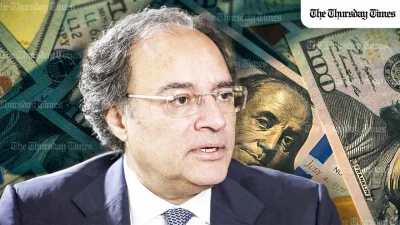
Pakistan to clear remaining $1.5bn UAE debt by April 23

Pakistan is moving to repay the last $1.5 billion of a UAE loan this week after already returning $2 billion, as officials look to an IMF board review expected next month to unlock fresh funding and steady market confidence.

Pakistan says it will repay the remaining balance of a $3.5 billion UAE loan by April 23, betting that a timely payment and a pending IMF tranche will reassure investors and reinforce a fragile recovery. — MONTAGE/THE THURSDAY TIMES

Sunday 19 April 2026

Islamabad locks down as Trump hints at high-stakes Iran deal

Pakistan’s capital region moved into an unusual state of alert after hotels were reportedly cleared, transport was suspended in Rawalpindi and security tightened across key routes, sharpening speculation that Islamabad could soon host another major diplomatic push tied to the US-Iran crisis.

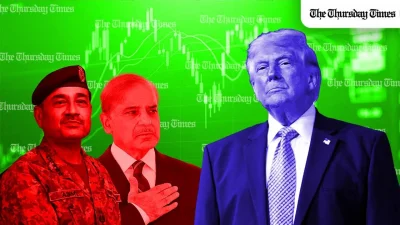
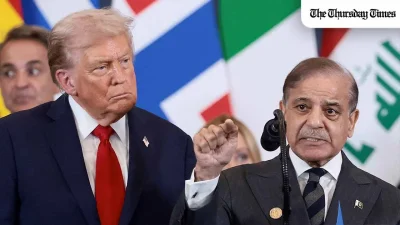
Islamabad and Rawalpindi tightened security, cleared hotels and suspended transport just as Donald Trump said he could visit Pakistan if an Iran deal is signed there, fuelling speculation that the capital may be preparing for another major diplomatic moment. — MONTAGE/THE THURSDAY TIMES

Pakistan escorted Iranian negotiators home amid Israeli threat fears

After the Islamabad Talks, Pakistan reportedly launched a major air operation to escort Iran’s negotiators home amidst an Israeli terror threat, reflecting both the danger hanging over the diplomatic track and Islamabad’s increasingly central role in trying to keep dialogue alive.

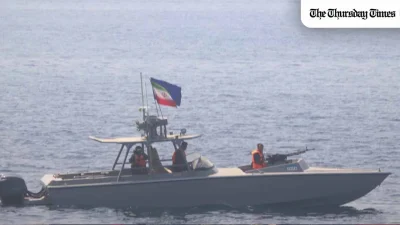
Pakistan’s reported decision to escort Iranian negotiators home with fighter aircraft after stalled talks in Islamabad has exposed the extreme danger surrounding the region’s fragile diplomacy, while underscoring Islamabad’s growing role as a critical intermediary between Washington and Tehran. — FILE

Saturday 18 April 2026

Moving beyond survival

After years of being defined by debt scares, bailouts and economic uncertainty, Pakistan is showing signs of a broader recovery marked by renewed market access, stronger investor confidence, diplomatic relevance and momentum that isn't stopping anytime soon.
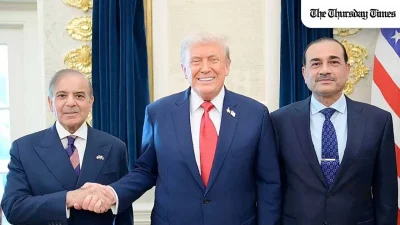
A string of positive developments suggests Pakistan may be entering a new chapter after years of economic strain. Market access, investor confidence and diplomatic relevance are beginning to replace the language of crisis. — MICHAEL MCCALL FOR THE THURSDAY TIMES
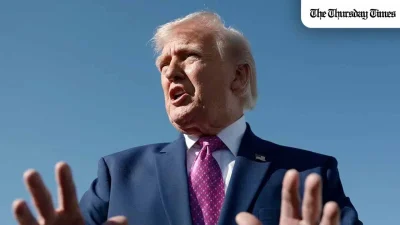
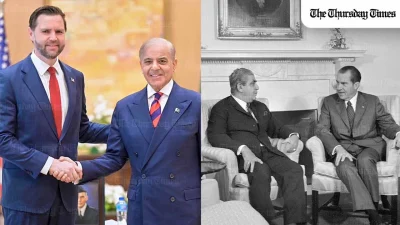
Pravin Sawhney links Pakistan to the rise of a new world order

Indian defence analyst Pravin Sawhney has argued that Pakistan could play a major role in the emerging world order, describing a multipolar system in which each region is shaped by a key state that acts as a centre of balance, wisdom and influence.

Pakistan is being discussed as a possible regional centre of influence as the world moves toward a multipolar order, with geography, diplomacy and connectivity strengthening its strategic relevance, according to Indian defence analyst Pravin Sawhney. — FILE/THE THURSDAY TIMES

Pakistan briefs Rothschild on return to global capital markets

Pakistan is accelerating plans to return to international capital markets, with Finance Minister Muhammad Aurangzeb using meetings in Washington to outline a diversified borrowing strategy that includes Eurobonds, a Panda bond and liability management tools.

In talks with Rothschild & Co, Pakistan’s finance chief set out a post-crisis borrowing strategy aimed at reopening access to global debt markets, broadening its investor base and lowering the cost of funding. — MICHAEL MCCALL FOR THE THURSDAY TIMES

UK no longer advises against travel to Gilgit-Baltistan

Britain has removed Gilgit-Baltistan from the restricted section of its Pakistan travel advice, easing a notable warning on the country’s mountainous north in a move which could positively affect tourism, insurance and international perceptions of the region.

The U.K. Foreign Office has revised its Pakistan travel advice and no longer places Gilgit-Baltistan under its “all but essential travel” warning. — FILE

Friday 17 April 2026

Thursday 16 April 2026

Pakistan says an Iran nuclear breakthrough may be close

Pakistan is pushing to convert its ceasefire mediation into something larger: progress on the nuclear issue at the centre of the Iran crisis. But while optimism has grown, key disputes remain unresolved and officials say a second round of talks has not yet been formally dated.

Pakistan is hoping movement on Iran’s nuclear programme could unlock wider diplomacy, even as officials caution that core disputes remain unresolved and no fresh round of talks has yet been formally scheduled. — FILE

Pakistan and US test a new economic opening in Washington

Pakistan and the US are exploring ways to deepen their economic partnership as Finance Minister Muhammad Aurangzeb uses World Bank and IMF meetings in Washington to pitch Pakistan as a resilient and reform-focused economy.

Pakistan and the United States used meetings in Washington to explore stronger trade and investment ties, as Islamabad also argued that global conflict is creating both risks and unexpected economic openings. — X/@COMMERCEGOV

White House puts Pakistan at centre of Iran talks

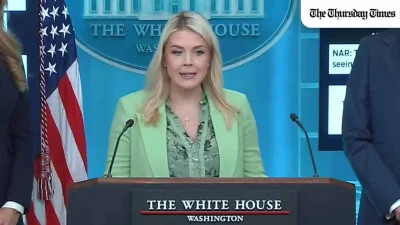
The White House has publicly declared Pakistan the sole mediator in the current United States-Iran negotiations, a striking statement that formalises Islamabad’s role as the main diplomatic channel in a volatile and unfinished process.

The White House has publicly identified Pakistan as the only mediator in the current United States-Iran negotiations, underscoring Islamabad’s growing centrality to a fragile effort to close a deal. — FILE/THE THURSDAY TIMES

Wednesday 15 April 2026

WESTLINE

Pakistanis at centre of fake gay asylum claims scandal in Britain

An undercover investigation has exposed how migrants, many of them Pakistani, are allegedly being coached to pose as gay in order to claim asylum in Britain, raising difficult questions about visa abuse, organised deception and the damage done to genuine refugees.

If the British state is serious about restoring confidence in the asylum system, it will have to confront the Pakistani dimension of this issue directly. — WESTLINE EXCLUSIVE

Tuesday 14 April 2026

The road to Islamabad

From calls with Tehran and Gulf capitals to ceasefire diplomacy and marathon talks in Islamabad, Pakistan has inserted itself into the most delicate phase of the U.S.-Iran crisis and emerged as an unlikely broker of dialogue.

Pakistan helped secure a ceasefire that halted direct confrontation, at least temporarily. It brought both sides to the table for the most senior direct talks in decades. And it prevented the collapse of diplomacy after the first round ended without agreement. — MICHAEL MCCALL FOR THE THURSDAY TIMES

Monday 13 April 2026

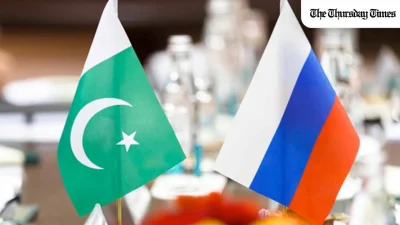
Pakistan eyes $1 billion from Russian tourism market

Pakistan is aiming to attract up to 50,000 Russian tourists annually and generate $1 billion in revenue from the market. Officials say changing travel patterns and Pakistan’s northern destinations could create a new opening for the country’s tourism industry.

Pakistan is chasing a billion-dollar tourism opportunity by trying to draw Russian travellers to its mountains, resorts and cultural sites. — FILE

Pakistan’s economic stabilisation earns Fitch affirmation

Pakistan has retained a B- rating from Fitch, with the agency citing reform momentum, improving macroeconomic stability and stronger foreign exchange buffers as reasons for the affirmation, while warning that the economy remains vulnerable to oil shocks.

Fitch’s latest verdict on Pakistan points to hard-won macroeconomic stability, though the agency cautioned that debt, reserves and external risks still weigh heavily on the outlook. — FILE/NURPHOTO

The Islamabad Talks did not fail. They opened the next phase

The Islamabad Talks were never designed to deliver an instant grand bargain between Washington and Tehran. Their significance lies in something more foundational: they preserved the ceasefire, brought both sides face to face, defined the central sticking point and opened the door to a second phase of diplomacy.

To call the Islamabad talks a failure is to misunderstand the nature of diplomacy itself. High-stakes negotiations, especially between adversaries who have not engaged at this level in decades, do not culminate in instant breakthroughs. — FILE

Sunday 12 April 2026

When rivals need a bridge, they still call Islamabad

Pakistan’s emergence as the setting for U.S.-Iran diplomacy in 2026 was not a sudden stroke of luck but the return of an older strategic role; long before officials sat across from one another in Islamabad, Pakistan was already the back channel by which messages, assurances and ceasefires were carried.

What Islamabad demonstrated in 2026 is not merely diplomatic agility, but institutional memory. The methods may have evolved, the actors may have changed, but the underlying approach remains consistent. — MONTAGE/THE THURSDAY TIMES
Published by Thursday Media International thursday.media